A while ago I asked several founders which books they recommend. For people who know that little world a bit, this is a fairly shameless copy of the version Pedro Pineda made a few years ago.
The big difference is that Pedro Pineda asked his friends and acquaintances which books they recommended, and the founders who are now my friends and acquaintances are not at that level yet.
Maybe later I'll make something similar, but by asking them directly. People like the folks at indies.cl or people I've met at the Platanus Forum.
For now, let's start with the list of books recommended by some founders I admire.
1. Pedro Pineda - Meditations, by Marcus Aurelius
This recommendation has a curious story. When I emailed Pedro Pineda I used the format he himself explained in "La Clase" for writing emails.
What I sent him was this:
Pedro, I'm Damian, I'm 20 years old, I'm cofounding Rodar (fractional ownership but with cars), and I hacked the grading system at my high school twice.
I want you to recommend me a book so I can put it on a blog. I know you had your own list and I'm copying you shamelessly, but with all the books you've read, surely something must have changed.
It would be great if you reply to this email telling me the name of the book and why you recommend it; it doesn't matter if it's philosophy, art, or Chinese for dummies.
Best,
And he replied:
Meditations, by Marcus Aurelius, because it teaches you how to live correctly.
Great, that was all.
Or maybe not.
Some time later, Nacho went to an event where Pedro Pineda was there. They talked for a while and my email came up.
Pedro mentioned that I had never replied and that it was rude.
Nacho came to the rescue and told him I was reading the book and that I would reply soon. That was a lie: I hadn't even bought it yet.
The truth is that the book he recommended to me is very good. That said, if you still haven't entered the philosophical world of Stoicism, I would start with other authors before jumping straight into Meditations.
2. Tomas Bercovich (Global66) - Atlas Shrugged, by Ayn Rand
Among many other things, it describes very well the difference between people who contribute to society and those who do not.
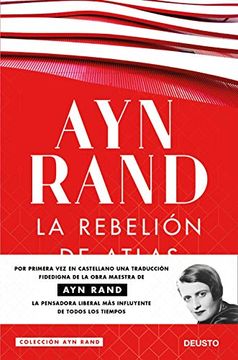
I still haven't read it, so I asked a friend what she thought of it. She told me it is an excellent book and that its ideological core revolves around the idea that creativity and human thought are what drive progress.
3. Eduardo Della Maggiora (Betterfly) - Meditations, The Obstacle Is the Way, and Grit
Eduardo recommended three books to me, and one overlaps with Pedro Pineda's.
I personally love The Obstacle Is the Way, by Ryan Holiday, so if you're looking for somewhere to start, that seems like a very good option to me.
4. Paula Enei (Platanus and El vaso medio lleno) - Why Greatness Cannot Be Planned
It seems like a great book to me, especially because it clashes quite a bit with my natural way of living day to day.
The central idea is that fixed goals can sometimes become enemies of progress, and that real progress often happens through unpredictable "intermediate goals."

PS: Paula mentioned that this book was the bible for Runway's founders.
5. Tomas Charles (Fraccional) - The Cold Start Problem
Tomas recommends this book because while he was building Urvana and Fraccional, both marketplaces, it helped him think through the classic chicken-and-egg problem in B2B2C models.

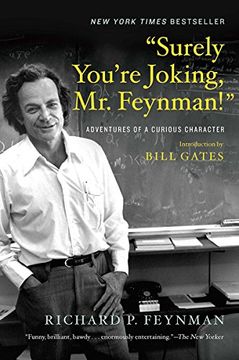
6. Leo Soto (Shinkansen) - Surely You're Joking, Mr. Feynman!, by Richard Feynman
At first I asked him for the recommendation on LinkedIn because the emails I sent him weren't getting through.
He replied there with the name of the book, but forgot to tell me why he recommended it.
So I did my high-caliber journalistic work, meaning I kept insisting by email, and I took advantage of Leo being at the Platanus Forum to follow up with him.
He told me two things. First, that Feynman is a role model for him.
Second, that the book works almost like a version of Meditations in Feynman mode: a collection of short stories where he tells episodes from his life and shows how, sometimes, doing things that seem to go against logic can end up being very beneficial.
Closing
That's all. I hope this list helps if you're looking for your next read.
Most of the emails I sent looked quite a lot like this:

And to the people who did reply: thank you very much for taking the time.